
AI-Generated design is destroying 3D printing creativity - and you should be terrified
AI is revolutionizing 3D printing design in 2025, but at what cost to human creativity and innovation? The machines are taking over.
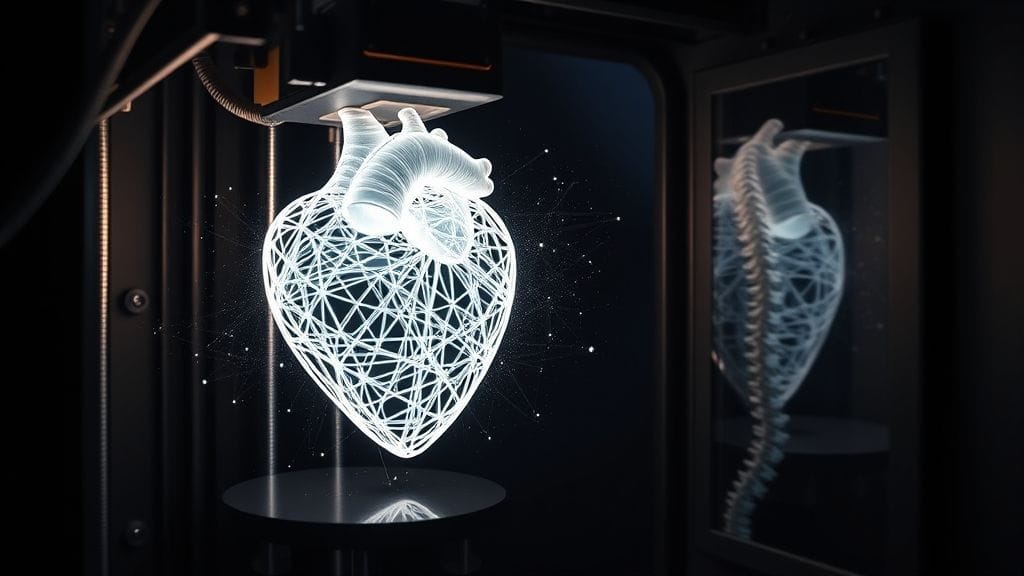
THE ROBOT TAKEOVER IS HERE
Listen up, makers and creators - while you've been busy calibrating your bed levels, artificial intelligence has been quietly staging a hostile takeover of the entire 3D printing ecosystem. We're not talking about cute little optimization algorithms anymore. This is full-scale creative annihilation. Generative AI design tools are now producing structures so complex, so mathematically perfect, that human designers might as well throw their calipers in the trash. The machines have learned to design better than we ever could, and they're doing it in SECONDS.
YOUR 'CREATIVE PROCESS' IS OBSOLETE
Remember spending hours in CAD software? Wasting precious brain cells on topology optimization? FORGET IT. AI systems are now generating thousands of design iterations in the time it takes you to make coffee. They're analyzing stress points, material properties, and manufacturing constraints simultaneously while you're still trying to remember which hotkey does what. This isn't evolution - it's execution. Your design skills are becoming as relevant as a floppy disk in a quantum computing lab.
THE END OF HUMAN INGENUITY
What happens when every optimized bracket, every weight-reduced component, every aerodynamically perfect shape comes from the same algorithmic brain? We're creating a monoculture of design where everything looks like it was generated by the same cold, calculating machine. The quirky imperfections, the creative leaps, the beautiful mistakes that lead to innovation - GONE. Replaced by mathematically optimal, soul-crushingly efficient sameness. This isn't progress; it's the artistic equivalent of eating nutrient paste for every meal.
THE COUNTERPOINT: TOOLS, NOT TYRANTS
However, let's not succumb to Luddite panic. AI design tools are exactly that - tools. They handle the tedious optimization work, freeing human creators to focus on higher-level creative problems, aesthetic considerations, and innovative applications. The best designs will always come from human-AI collaboration, not replacement. These systems amplify human creativity rather than replace it, serving as powerful assistants that expand what's possible rather than constrain it.