
The Dawn of Designer Organs: How Bioprinting is Revolutionizing Medicine
Explore the revolutionary world of bioprinting, a 3D printing trend fabricating custom organs and tissues, transforming medicine and offering hope for a future free from organ shortages.
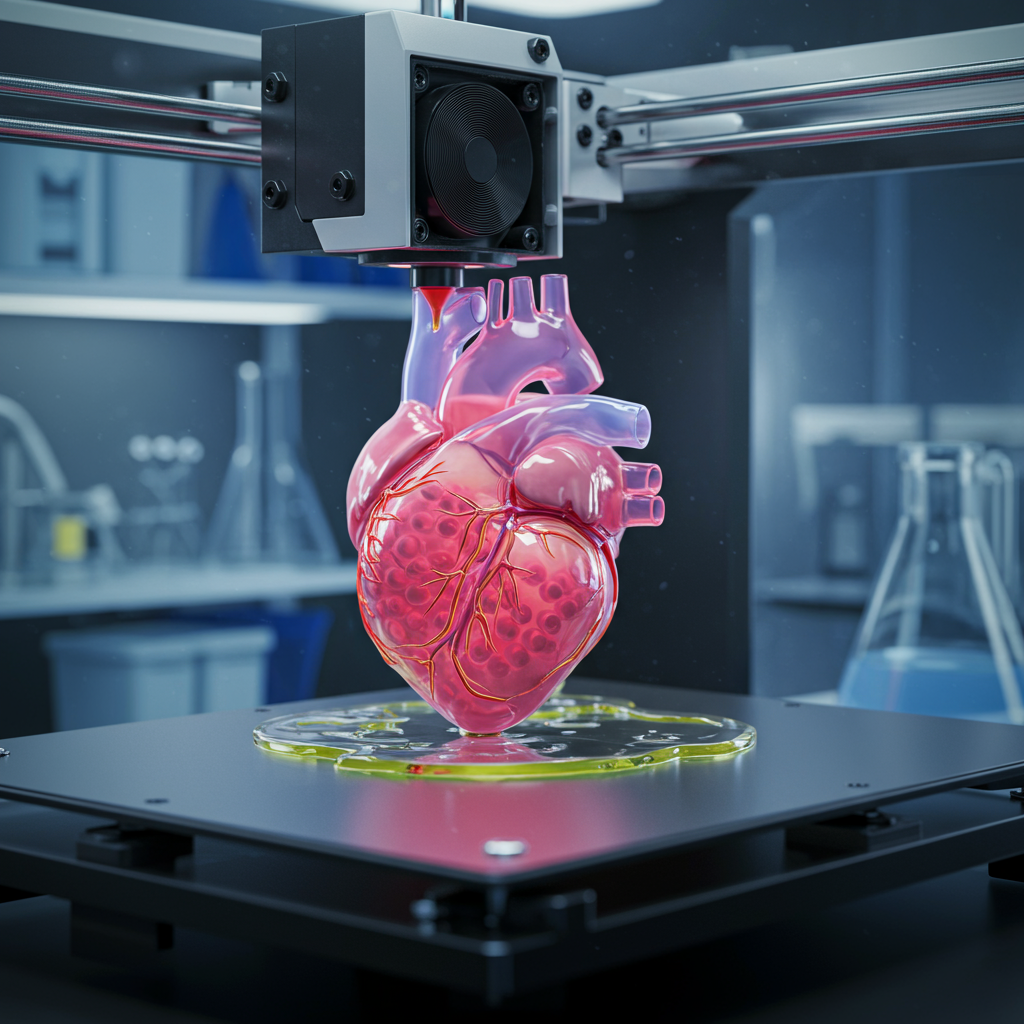
Imagine a future where organ shortages are a relic of the past, where a failing kidney or heart can be replaced not by a donor, but by a custom-printed, fully functional replica. This isn't science fiction; it's the rapidly advancing reality of bioprinting. This groundbreaking 3D printing trend uses "bio-inks" – living cells and biocompatible materials – to construct complex biological structures layer by layer, mimicking the intricate architecture of human tissues and organs. It promises a paradigm shift in healthcare, moving us closer to personalized medicine and away from the critical limitations of organ donation.
The implications of bioprinting stretch far beyond simply replacing organs. Researchers are already using bioprinted tissues for drug testing, creating more accurate models of human disease than traditional animal testing. This not only accelerates drug discovery but also reduces ethical concerns. Furthermore, bioprinting holds immense potential for regenerative medicine, enabling the creation of skin grafts for burn victims, cartilage for joint repair, and even vascular networks to support larger, more complex tissue constructs. The precision and customization offered by this technology are unparalleled, opening doors to treatments previously deemed impossible.
While the promise is vast, the journey of bioprinting is still in its early stages. Overcoming challenges such as vascularization (ensuring printed organs receive adequate blood supply), achieving long-term functionality, and scaling production remain critical hurdles. However, with rapid advancements in materials science, cell biology, and robotics, the pace of innovation is accelerating. The vision of fully functional, transplantable bioprinted organs within our lifetime is becoming increasingly plausible, offering hope to millions awaiting life-saving transplants and ushering in an era of truly regenerative healthcare.
Despite its incredible potential, the ethical and societal implications of bioprinting warrant careful consideration. The accessibility of such advanced treatments, the potential for genetic manipulation in printed organs, and the very definition of what it means to be human when body parts can be manufactured, raise profound philosophical questions. While offering solutions to critical medical needs, we must navigate this new frontier with a robust ethical framework to ensure equitable access and prevent unintended consequences, balancing innovation with responsibility.